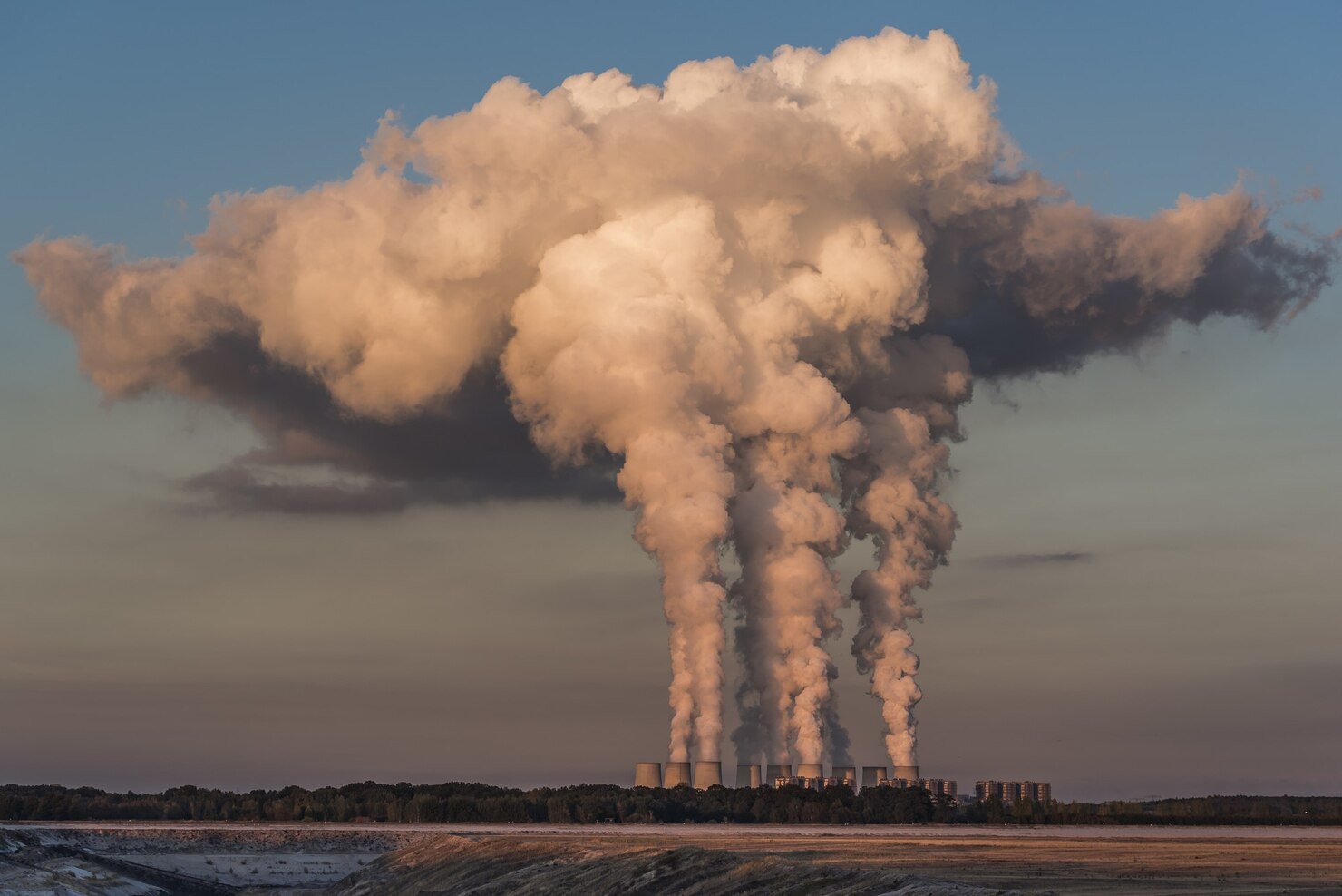
Nuclear Power: Green Solution or Dangerous Gamble?
Blackouts in California. Energy rationing across Europe. Soaring electricity prices from Texas to Tokyo. These aren’t isolated incidents — they’re symptoms of a system under strain. Global energy demand has surged in recent decades, driven by population growth, digital infrastructure, and the electrification of everything from transport to manufacturing.
Coal and natural gas — the long-standing pillars of global electricity generation — now face growing scrutiny. Their contribution to greenhouse gas emissions, air pollution, and environmental degradation is undeniable. Yet renewables like wind and solar, while rapidly expanding, still battle intermittency issues and storage challenges. The gap between what we need and what clean alternatives can reliably deliver remains significant.
In that void, nuclear power reenters the global conversation — not as a Cold War relic, but as a contender in the race to stabilize the grid and decarbonize the planet.
How Nuclear Energy Works — And What Sets It Apart
At its heart, nuclear energy is deceptively simple: split atoms, release heat, use that heat to produce steam, and drive turbines that generate electricity. The complexity lies in scale, precision, and safety. Most reactors today rely on uranium-235, a fissile isotope that, when bombarded with neutrons, unleashes a chain reaction and enormous thermal energy.
What distinguishes nuclear energy isn’t just how it works — it’s what it avoids. There’s no combustion, no fossil fuels, no CO₂ released in the generation process. One uranium fuel pellet — roughly the size of a fingertip — can produce as much energy as one ton of coal. This high energy density makes nuclear ideal for meeting large-scale base-load demands, the kind that solar panels can’t deliver on cloudy days or wind farms can’t provide when the air is still.
Another key trait: reliability. Nuclear plants operate at full capacity over 90% of the time — far above solar (~25%) or wind (~35%). This consistency is a rare commodity in a world where energy volatility often triggers economic ripples.
The Core Advantages: What Nuclear Power Gets Right
When examining energy strategies for the coming decades, any viable solution must tick off several boxes: low emissions, scalability, reliability, and efficiency. Nuclear power hits more of these than many realize.
- Zero direct CO₂ emissions. Nuclear reactors do not burn fuel. This means they produce virtually no carbon dioxide during operation. For nations striving toward net-zero goals, nuclear is one of the few scalable technologies that cuts emissions without sacrificing supply.
- Base-load stability. Unlike solar and wind, nuclear isn’t weather-dependent. Once a reactor is online, it delivers uninterrupted power for months, often up to two years before needing refueling. That’s critical for hospitals, data centers, and infrastructure that can’t afford downtime.
- Compact land use. Per megawatt produced, nuclear requires far less land than renewables. While a utility-scale solar farm might spread across hundreds of acres, a nuclear facility can generate the same output on a fraction of that footprint — a decisive factor in densely populated regions.
- Long-term investment. Though initial construction is expensive, nuclear plants can operate for 40–60 years or longer. Over time, that translates to a stable return on infrastructure, which is increasingly attractive for governments seeking energy security.
- Low operating costs. Once built, nuclear plants have relatively low fuel and maintenance costs. With uranium prices stable and fuel efficiency high, operating expenses remain predictable — a rare perk in volatile global energy markets.
These arguments form the backbone of pro-nuclear advocacy and have contributed to a growing shift in public opinion, particularly among younger generations concerned with climate change.
That said, no energy source exists in a vacuum — and for every compelling benefit, nuclear power has raised alarms that can’t be dismissed. As momentum builds, so does resistance — often rooted in history, fear, and the very real weight of past disasters.
The conversation about nuclear power pros and cons is far from one-sided. In fact, it’s the tension between these strengths and risks that defines the nuclear dilemma — one we’ll explore in depth in the next section.
The Darker Half: Real Risks and Historic Lessons
Every energy source has trade-offs. But when it comes to nuclear power, the risks feel uniquely visceral. Radiation leaks. Evacuations. Fallout zones. These aren’t abstract fears — they’re echoes of real events that left scars not only on the environment but on public consciousness.
Three accidents define nuclear’s legacy in the modern era: Three Mile Island (1979), Chernobyl (1986), and Fukushima (2011). Each had different causes — mechanical failure, human error, natural disaster — but all shared one truth: even the best safeguards can falter. The consequences ranged from immediate health risks and displacement of entire communities to long-term contamination and a global rethinking of nuclear safety.
While newer reactor designs have improved dramatically, these disasters still serve as case studies in worst-case scenarios. Critics argue that even a low-probability event is unacceptable when the damage can span generations.
The Waste Problem: Long-Term Storage, Short-Term Politics
Unlike fossil fuels, nuclear energy doesn’t emit carbon. But it produces radioactive waste — a challenge that has no perfect solution.
Spent nuclear fuel remains hazardous for thousands of years. While it’s often stored on-site in pools or dry casks, permanent disposal remains elusive. In the U.S., for instance, the much-debated Yucca Mountain project was shelved after decades of political resistance, despite billions in investment.
Interim solutions are safe but temporary. And transporting waste poses risks of its own — from accidents to potential targeting. What happens when temporary turns into indefinite?
No nation has yet implemented a fully functioning, long-term underground repository. Until that changes, the waste issue remains a major sticking point in the sustainable energy debate.
Security and Proliferation: The Human Factor
Beyond accidents and waste, nuclear energy faces another specter: weaponization.
The line between civilian and military nuclear technology is thin. Enriched uranium for power plants is chemically similar to what’s used in bombs. Though safeguards exist through the International Atomic Energy Agency, history has shown how dual-use capabilities can be diverted or abused.
Nuclear plants also become strategic targets — in both conventional warfare and terrorism scenarios. A single strike could release radioactive material, disrupt a nation’s grid, or spread panic.
And then there’s the human factor: negligence, cost-cutting, insufficient training. Even in highly regulated environments, overconfidence can lead to complacency. When failure carries consequences this severe, even small errors are unacceptable.
Economics of Ambition: Not Cheap, Not Fast
Nuclear power is often framed as a silver bullet for climate change — a reliable, clean energy source capable of replacing fossil fuels. But building that reality takes time and money. A lot of both.
Modern nuclear plants are notoriously expensive to construct. Projects frequently run over budget and behind schedule. The Hinkley Point C plant in the UK, for example, has ballooned from an estimated £16 billion to over £30 billion, with delays stretching nearly a decade.
Several factors contribute to the cost:
- Regulatory complexity and long approval cycles
- Scarcity of skilled labor and qualified contractors
- Safety redundancies that, while vital, add massive engineering layers
- Public opposition, which can stall or cancel projects midstream
For governments trying to decarbonize quickly, waiting 10–15 years for a reactor to come online isn’t always practical — especially when wind or solar can be deployed in months.
Public Opinion: Shifting, But Still Split
The debate over nuclear energy is as much cultural as it is technical.
In some countries, like France, nuclear is embraced — supplying over 70% of the nation’s electricity. In others, like Germany, it’s being phased out entirely in favor of renewables, a decision accelerated by Fukushima.
Younger generations, raised in the shadow of climate anxiety rather than Cold War nuclear fears, are often more open to reconsidering nuclear — especially small modular reactors (SMRs) and newer designs perceived as safer.
Still, opinion polls show a persistent divide. Support often surges during energy crises or climate emergencies, then recedes after headlines of mishaps or political controversies.
In essence, nuclear power walks a tightrope: trusted by scientists, doubted by activists, and politicized by governments. Its future may depend less on what it can do — and more on who’s willing to trust it.
Nuclear vs. Renewables: Which Future Are We Betting On?
The clean energy conversation is often painted as a contest: wind and solar versus nuclear. But it’s not that simple. Each source brings unique advantages — and limitations — to the table.
Wind and solar have seen explosive growth over the past decade, largely due to falling costs and favorable policies. They’re clean, decentralized, and visible — rooftop panels and spinning turbines are symbols of progress. But their Achilles’ heel is consistency. The sun doesn’t always shine, and the wind doesn’t always blow. Even with battery storage, scaling these technologies to deliver reliable base-load power remains a challenge.
Nuclear, on the other hand, offers round-the-clock generation. It doesn’t require vast land footprints or depend on weather patterns. Yet it lacks the grassroots appeal and speed of deployment that make renewables so politically attractive.
The smartest energy strategies avoid choosing sides. They combine the strengths of multiple technologies to create a resilient, low-carbon grid. In that context, nuclear isn’t a competitor — it’s a complement. And in many scenarios, it fills a critical role that renewables currently can’t cover alone.
That’s the nuance often lost in the broader sustainable energy debate: this isn’t a question of either-or — it’s a question of when, where, and how each source fits into the puzzle.
The Political and Ethical Dilemma
Deciding whether to invest in nuclear power isn’t just a technical matter — it’s deeply political and, at times, moral.
Some governments embrace nuclear as a pillar of energy independence. Others reject it due to historical trauma, public distrust, or strategic concerns. International treaties attempt to regulate proliferation, but enforcement depends on political will — which isn’t always guaranteed.
The ethics are murkier still. Is it acceptable to risk rare but catastrophic disasters for long-term climate stability? Does investing in nuclear delay the growth of safer alternatives? And what happens when future generations inherit our decisions — and our waste?
These are not rhetorical questions. They shape energy policy, budgets, and infrastructure around the globe. In countries with strong institutions, nuclear oversight may be trusted. Elsewhere, the same technology raises legitimate fears about corruption, maintenance, or misuse.
Trust, in this debate, is just as vital as technology.
What’s Next? Between Innovation and Caution
Despite its baggage, nuclear energy is undergoing a quiet reinvention. The next generation of reactors promises to be safer, smaller, and more adaptable.
Small Modular Reactors (SMRs) — one of the most discussed innovations — are designed to be built in factories and transported to site. They offer scalable capacity and lower upfront costs, with safety features that prevent the kinds of meltdowns associated with older designs.
Then there’s thorium — a potential fuel alternative to uranium — which produces less long-lived waste and resists weaponization. It’s not new (experiments began in the 1950s), but renewed interest signals a shift in thinking.
Other developments include:
- Fast breeder reactors that reuse spent fuel
- Molten salt designs with passive cooling
- Fusion research, still decades from viability but symbolically important
These technologies are promising — but not guaranteed. Funding, regulation, and public support will determine whether they move from concept to grid. And even the best innovation can’t erase the memory of past missteps.
The Verdict: A Risk We Can Afford — or Can’t Ignore?
So, is nuclear power a green solution — or a dangerous gamble?
The answer is neither neat nor universal. In some nations, nuclear may be the only path to energy security without emissions. In others, its risks outweigh its rewards. The truth lies in how it’s managed, who’s in control, and whether the systems surrounding it are built for accountability.
What’s clear is this: climate change demands urgency. Every viable tool should be on the table. But every tool must be used wisely, transparently, and with a full understanding of its consequences.
Nuclear power won’t save the planet on its own. But ignoring it outright may cost us the time — and carbon budget — we don’t have.
It’s not about being pro- or anti-nuclear. It’s about making informed, pragmatic choices in a moment that doesn’t allow for idealism alone.