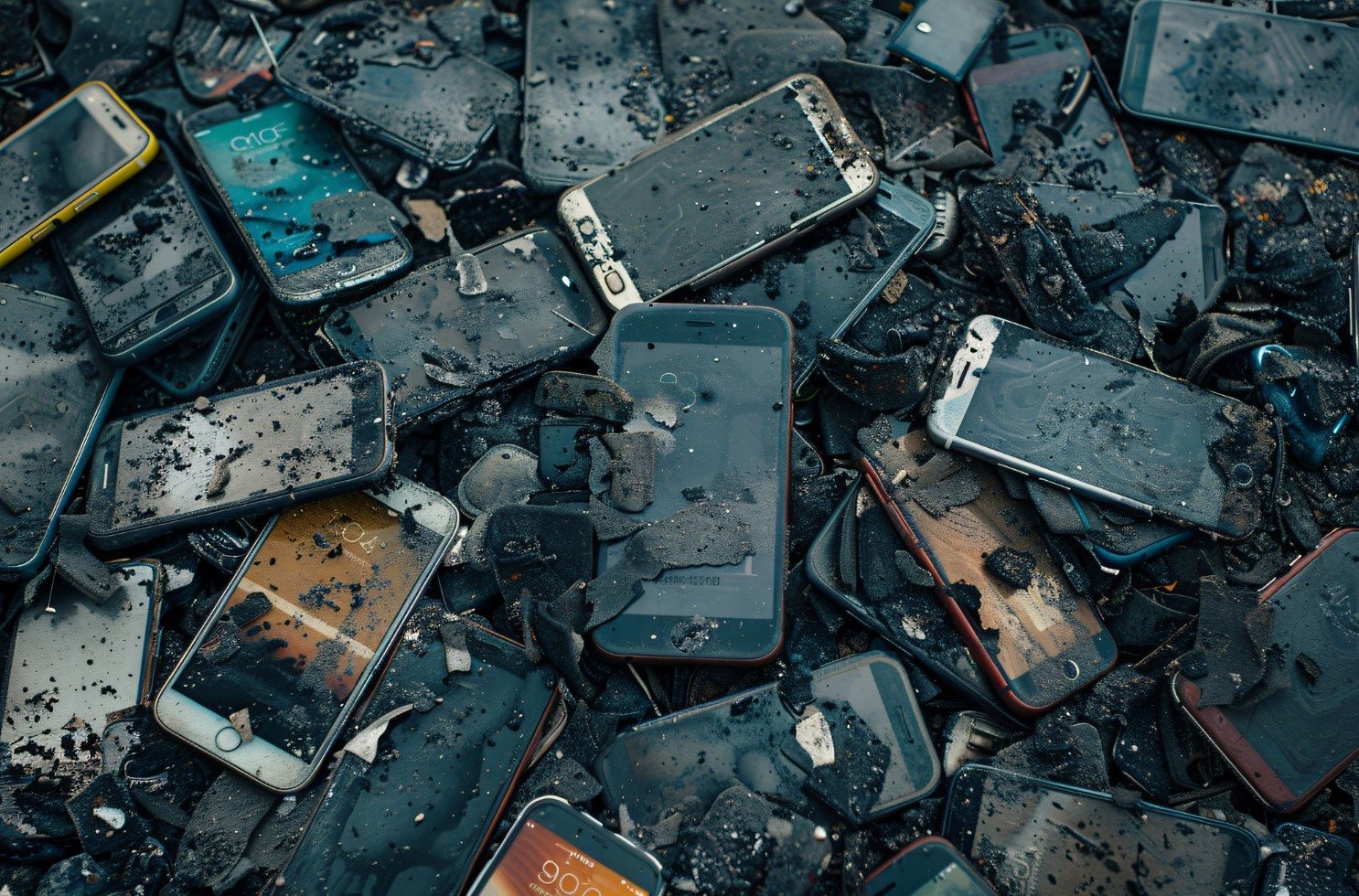
E-Waste Crisis: What Happens to Your Old Phone?
You upgrade, swap, or toss it in a drawer. Maybe it ends up in the back of a closet or quietly vanishes into a “recycling” bin at work. Out of sight, out of mind. But that old phone doesn’t just disappear—it enters a global crisis.
Electronic waste is one of the fastest-growing waste streams on Earth. We throw away over 50 million metric tons of e-waste every year. That’s more than the weight of all commercial airliners ever built—every single year.
And a big chunk of it? Phones. Laptops. Tablets. Chargers. Devices designed to be obsolete within 24 months. Most of them aren’t recycled, reused, or even properly stored. They’re dumped, burned, or shipped to countries with lower labor costs and weaker regulations.
The result is a toxic trail that begins in your pocket—and ends in someone else’s backyard.
The Dirty Side of Tech Pollution
When we talk about pollution, images of smokestacks or oil spills usually come to mind. But tech waste creates its own kind of damage—hidden, chemical, and long-lasting.
So what happens when your old device is discarded the wrong way?
- Toxic metals leak into the ground. Circuit boards contain lead, mercury, cadmium, and arsenic. When buried, these substances can seep into soil and groundwater, poisoning plants and drinking supplies.
- Batteries explode or burn. Lithium-ion batteries are unstable if punctured, crushed, or exposed to heat. In landfills, they’re a fire hazard. In the wrong hands, they’re dangerous waste.
- Plastic components break down—but not really. Most tech is encased in plastics that don’t biodegrade. Over time, they fragment into microplastics, contaminating soil and water—particles too small to filter out, but big enough to accumulate in living tissue.
- Burning e-waste releases deadly chemicals. In some parts of the world, tech trash is burned to recover metal. But this crude method releases dioxins, furans, and other persistent organic pollutants—chemicals that cause cancer, disrupt hormones, and linger in the environment for decades.
This form of damage doesn’t make headlines like oil spills do, but it’s just as devastating—and far harder to clean up.
The problem with tech pollution is that it’s designed into the product. Devices are built to be cheap, compact, and difficult to take apart. Recycling them safely is expensive. Tossing them into a hole in the ground is cheaper. Guess which one happens more often?
Why Phones Are the Worst Offenders
It might feel like a phone is a small item—light, sleek, easy to forget. But that’s part of the problem. Phones are packed with more tech per square inch than most home appliances. Inside every smartphone, you’ll find:
- Rare earth elements extracted from fragile ecosystems
- Gold and copper mined under hazardous conditions
- Non-removable batteries glued into tightly sealed frames
- Screens coated with layers of heavy metals and rare materials
All of this is difficult—and sometimes impossible—to recycle efficiently. And with more than 1.5 billion smartphones sold each year, the waste adds up fast.
What’s worse: many devices are discarded not because they’re broken, but because they’re outdated. A cracked screen. A slower chip. A battery that barely lasts a day. These are fixable issues—but fast upgrades and sleek marketing convince us otherwise.
The consequence? Millions of devices are thrown out long before the end of their usable life. Each one adds another layer to a growing toxic pile.
The Recycling Myth: Why Most Electronics Don’t Get Recycled
Take a wild guess—what percentage of e-waste actually gets recycled?
It’s less than 20%. And that’s the global average. In some countries, it’s under 10%.
The rest? Burned in open pits, dumped in landfills, or exported to regions where safety standards are little more than a suggestion. So even if you’ve placed your old laptop or phone into a “recycling” bin, the odds are high it never got a second life.
Why? Because electronics recycling is messy, expensive, and often unprofitable.
Unlike cans or paper, which can be recycled relatively easily and cost-effectively, electronics are deliberately hard to take apart. Manufacturers seal batteries into phones, glue layers together, and mix materials in ways that make disassembly a nightmare. Devices are also shrinking—making the retrieval of valuable components more difficult.
And while some metals like gold, copper, and palladium can be extracted, doing so safely takes labor, energy, and equipment most facilities don’t have. It’s often cheaper to throw the device away than to process it correctly.
When Electronics Recycling Actually Works
To understand the rare cases where electronics are truly recycled, let’s break down what should happen:
- Collection & Sorting. Devices are dropped off at certified e-waste centers—not regular recycling bins. Trained workers separate phones, laptops, batteries, cords, etc.
- Data Removal & Disassembly. Each item is wiped of personal data. Then, devices are carefully dismantled. This step is crucial—shredding everything leads to contamination and wasted resources.
- Component Recovery
. Valuable parts (like processors or memory chips) may be salvaged. Metals are separated using magnets, water, or heat. Plastic and glass are sorted for reuse. - Safe Disposal of Hazards.Anything that can’t be reused—especially batteries and mercury components—must be disposed of as hazardous waste, using special protocols.
The whole process is time-consuming and costly. That’s why legitimate electronics recycling is rare—and why many recyclers cut corners or quietly ship e-waste overseas.
Where E-Waste Really Goes
Many people are shocked to learn that their “recycled” phone may end up in Ghana, India, or the outskirts of Jakarta. These places have become dumping grounds for the world’s electronics.
Here’s what happens there:
- Workers, often teenagers, burn circuit boards in open fires to extract metal.
- Toxic ash settles into the soil and rivers.
- People inhale toxic fumes daily, with little to no protection.
- Entire communities live surrounded by plastic, glass, and toxic sludge.
This isn’t recycling. It’s outsourcing pollution. Wealthy countries pass the environmental burden to poorer ones, under the false label of “recovery” or “re-use.”
The Illusion of Green
Some brands have started offering take-back programs or in-store recycling bins. While these efforts sound promising, they often lack transparency.
Where exactly do the devices go? Who handles them? Are they processed locally or sent abroad? Few companies provide clear answers. And when there’s no audit trail, “green” quickly turns gray.
Even tech labeled as “refurbished” is often rebranded e-waste—stripped of valuable parts and sold as-is, without guarantees.
Recycling isn’t a bad idea. But when it comes to electronics, the system is badly broken. Until there’s real accountability, true recycling will remain the exception, not the rule.
What Can You Actually Do?
The solution doesn’t begin with better bins. It begins with better habits:
- Repair first: Replace batteries, fix screens, update software
- Buy for longevity: Choose models that are repairable, not just trendy
- Donate, don’t dump: Working devices can be reused by schools, shelters, or NGOs
- Find certified recyclers: Look for e-Stewards or R2 certified centers in your area
And most importantly—buy less often. The most sustainable gadget is the one you already own.
What Real E-Waste Management Should Look Like
Let’s imagine a world where your old phone doesn’t just vanish—but becomes part of a system that actually works.
Proper e-waste management isn’t just about throwing devices into the right bin. It’s a full cycle that starts with design and ends with responsible disposal. Here’s how it should work—and why it rarely does.
Designing for Disassembly
Tech companies must take the lead. That means building phones, tablets, and laptops that are modular, repairable, and recyclable. No more sealed batteries, glued screens, or mixed materials that make devices nearly impossible to take apart without destroying them.
Right now, design is optimized for sleekness and profits—not sustainability. That needs to change.
Regulating the Right Way
Governments can enforce better standards:
- Mandatory producer responsibility: Brands must take back and properly recycle their products.
- Bans on overseas dumping: No more exporting hazardous waste to countries without the resources to handle it.
- Certified recyclers only: Unregulated operations shouldn’t be allowed to process e-waste.
Europe’s WEEE Directive and the Right to Repair laws are promising starts. But global enforcement is patchy, and loopholes are everywhere.
Infrastructure That Works
Most cities don’t have proper drop-off points or verified recycling centers. That leads people to toss devices in the trash or hand them to shady recyclers. What we need is:
- Accessible collection points in every community
- Digital tracking systems to monitor where devices go
- Public awareness campaigns that explain what to do and why it matters
Without infrastructure, even the most eco-conscious consumer is stuck.
The Role of Big Tech (And Its Silence)
Tech companies love to talk about carbon neutrality and green packaging. But they stay quiet about the real monster—waste.
Why? Because creating a new phone every year is profitable. Because repairing your old one doesn’t make them money. Because a circular economy demands they sell less—and that’s not good for shareholders.
Yet they hold the power to change everything:
- Shift toward repairable design
- Offer long-term software support
- Stop planned obsolescence disguised as innovation
- Open repair manuals and parts to independent shops
A phone should last five years. A laptop? Ten. But right now, we’re trained to treat tech like fast food: cheap, fast, disposable.
What You Can Actually Control
You’re not powerless. Here’s how individual habits can reduce the wave of waste:
- Think before upgrading. Ask yourself: Do you need the new phone—or just want it?
- Support repair shops. Keeping a device alive one more year cuts its footprint drastically.
- Buy used or refurbished. Demand drives production. Less demand means less extraction, less waste.
- Dispose properly. Don’t dump it, don’t donate junk, and don’t trust any bin without verification.
Every phone you don’t throw away is one less item added to a landfill, one less child breathing smoke from a burning circuit board.
E-Waste Is a Design Problem, Not a Consumer Failure
The e-waste crisis is not your fault alone. It’s a result of decades of decisions made by people who prioritized profits over sustainability. But that doesn’t mean change is impossible.
With smarter policies, better design, real infrastructure, and a shift in how we value tech, we can build a future where electronics don’t poison the earth the moment we’re done with them.
Until then, the best thing you can do?
Hold onto your phone just a little longer.
And when you finally say goodbye—make sure it’s not a quiet burial, but a conscious step forward.